Best States for Raising Chickens & Backyard Poultry (2026)
Compare the best US states for raising chickens. Where you can sell eggs and meat birds freely, low rural regulation, and easy winter coop care.
Written by Homestead Finder Editorial

You can keep a few backyard hens almost anywhere rural, so the location question only gets interesting once you want to scale up: a real flock, regular eggs to sell, maybe a batch of meat birds. At that point three things separate a good state from a frustrating one: how freely you can sell what you produce, how light the rural zoning and regulation are, and how hard the winters are on your birds and your water. This guide ranks states on those terms, not on whether you're "allowed" to own chickens. Planning a flock? Our chicken flock & coop calculator sizes the hens, coop space, and feed you'll need.
For the bigger picture, start with our 50-state comparison and our best states for homesteading in 2026 guide. If you're just getting started, our how to start a homestead guide covers the first steps.
What Actually Separates the Best States
A laying hen doesn't care which state line she's behind. The differences that matter are legal and climatic, not biological.
- Freedom to sell eggs and meat birds. This is the big one. Selling a dozen eggs at the farm gate is easy in most states, but selling at markets, online, or scaling into meat birds runs into cottage-food and farm-direct rules that vary a lot.
- Low rural zoning and regulation. Some states leave rural property almost entirely alone, with no flock-size caps and few permits, letting a backyard setup grow into a small operation without a fight.
- Climate and winter care. Mild-winter states let you run a simple, well-ventilated coop year-round. Cold states are perfectly workable, but they demand insulated, draft-free housing and a plan to keep water from freezing.
Notice what's not on the list: whether chickens are legal. They almost always are on rural land. The constraints that bite are the selling rules and any town or HOA flock limits.
How Egg and Meat Sales Are Regulated
This is where states genuinely differ, so it's worth understanding before you pick.
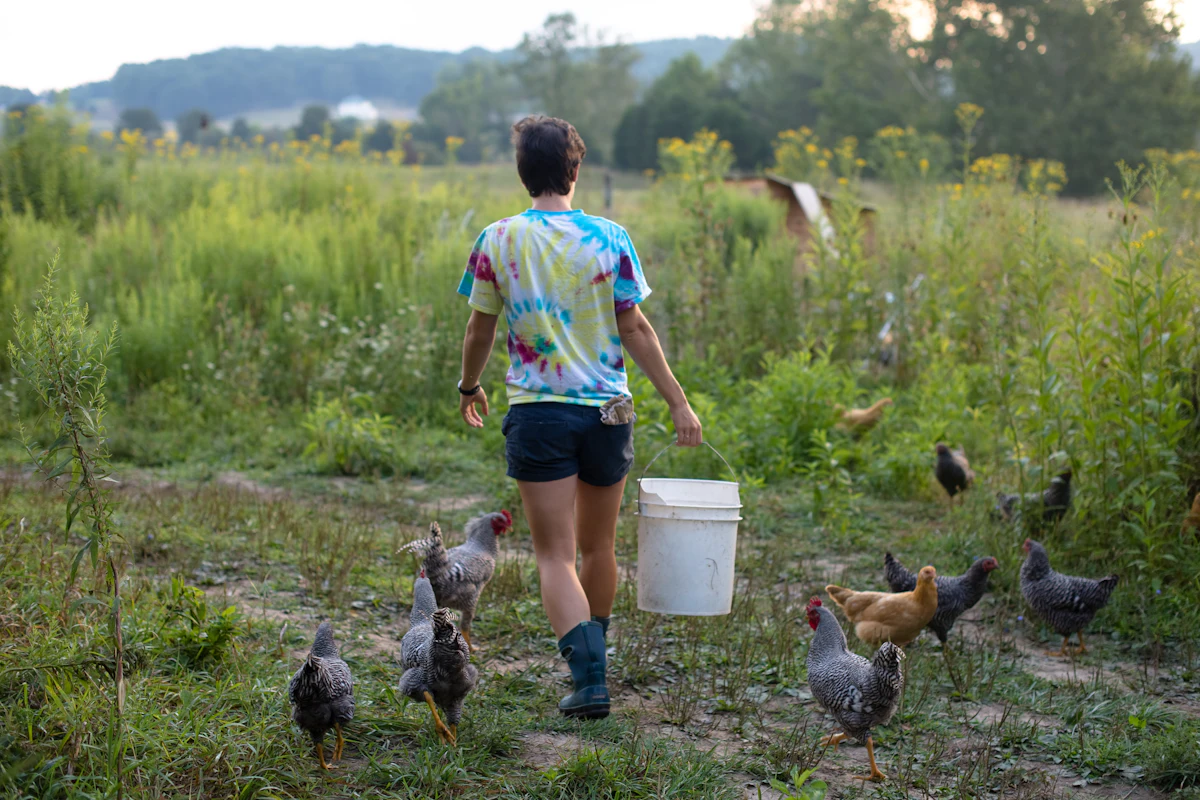
Most states treat shell eggs sold directly from your farm to the end consumer fairly lightly, often with a small-producer exemption. The rules get stricter once you sell to stores, cross state lines, or move into processed goods and meat birds. Those activities fall under each state's cottage-food and poultry-processing rules, and the details are very state-specific.
A handful of states stand out for how much freedom they give a small producer:
- Wyoming passed a Food Freedom Act that is among the broadest in the country, allowing direct producer-to-consumer sales of many homemade and home-raised foods with minimal state involvement.
- Maine has a Food Sovereignty Act that lets towns opt into local food rules, which in many areas makes direct sales of eggs and farm goods simpler.
- Texas has strong cottage-food rules covering home, market, and online sales, useful if you want to reach customers beyond the farm gate.
- Tennessee is also strong, with cottage-food allowances reported up to a $50,000 annual ceiling.
Beyond those, several low-regulation, homestead-friendly states permit cottage-food sales and keep rural rules light: Missouri, Oklahoma, Kentucky, Georgia, Alabama, Arkansas, and Mississippi. For a deeper look at how these rules work, see our cottage food laws by state guide.
One caution applies everywhere: meat birds and processed products carry extra rules even in the freest states, and town or HOA limits can override state freedom on a specific parcel. Always confirm your local cottage-food and egg-sale rules before you plan around selling.
The Best States for Raising Chickens in 2026
These picks combine egg-sale freedom, low rural regulation, and a climate that keeps winter chicken-keeping manageable. The warm Southeast makes winter care easiest, while Wyoming and Maine win on the sheer freedom to sell what you produce.
| State | Cottage/egg-sale friendliness | Climate | Note |
|---|---|---|---|
| Texas | Strong (home, market, online) | Mild in the south | Broad reach for selling; long season down south |
| Tennessee | Strong (up to ~$50K/yr) | Mild | Easy winters, light rural rules |
| Georgia | Permitted, low regulation | Mild | Long warm season, simple coops |
| Wyoming | Food Freedom Act (broadest) | Cold winters | Top freedom to sell; needs insulated housing |
| Missouri | Permitted, low regulation | Four-season | Central, deep farm culture |
| Oklahoma | Permitted, low regulation | Mild to moderate | Affordable, light regulation |
| Kentucky | Permitted, low regulation | Four-season | Strong farm tradition |
| Alabama | Limited (some foods license-free) | Mild | Cheap land, long grazing/forage season |
Texas
Texas pairs strong cottage-food rules covering home, market, and online sales with a deep agricultural culture and, across most of the state, a long warm season. South and central Texas let you run a simple coop nearly year-round, while the Panhandle gets real winters. The combination of selling reach and light rural regulation makes it one of the most flexible states for scaling a flock. See the Texas state page.
Tennessee
Tennessee is a strong all-rounder: mild winters that keep coop design simple, light rural regulation, and cottage-food sales allowed with no dollar cap under the Food Freedom Act. That headroom matters if eggs and farm goods grow from a hobby into real income. More on the Tennessee state page.
Georgia
Georgia's mild climate is a gift for poultry keepers. A long warm season means a well-ventilated coop without heavy insulation, and the state's low-regulation, cottage-food-permitted environment makes direct sales straightforward. Summer heat is the bigger concern here than winter cold, so shade and ventilation matter more than insulation. See the Georgia homesteading guide and the Georgia state page.
Wyoming
Wyoming wins on freedom. Its Food Freedom Act is among the broadest in the US, letting you sell home-raised and homemade foods direct to consumers with minimal red tape, exactly the regime a small egg or poultry producer wants. The trade-off is climate: winters are cold, so you'll need an insulated, draft-free coop and a heated waterer. The freedom is worth the extra build for many homesteaders. See the Wyoming homesteading guide and the Wyoming state page.
Missouri
Missouri sits centrally with deep farm infrastructure, low rural regulation, and cottage-food sales permitted. Winters are real but moderate, manageable with a properly built coop, and feed, chicks, and know-how are never far away. See the Missouri homesteading guide and the Missouri state page.
Oklahoma
Oklahoma offers affordable land, light regulation, and permitted cottage-food sales. Its climate runs mild to moderate, easier on a flock than the northern plains, and the state's general light touch on rural property keeps a growing operation simple. Visit the Oklahoma state page.
Kentucky
Kentucky brings a strong farm tradition, permitted cottage-food sales, and light rural rules. Winters are a true four-season affair but moderate enough that a draft-free coop and a thaw plan for waterers handle them. See the Kentucky state page.
Alabama
Alabama rounds out the list with cheap land and a mild, long season. Its cottage-food rules are more limited than Georgia's — certain foods can be sold without a license, but the allowance is narrower — so confirm exactly what you can sell before counting on egg or baked-goods income. The warm climate keeps coop design simple, and as in Georgia, managing summer heat matters more than fighting winter cold. See the Alabama state page.
Practical Poultry-Keeping by Climate
The right setup depends far more on your winters than on your state line.
In mild-winter states, Florida, Georgia, Alabama, South Carolina, Mississippi, the southern half of Texas, and Tennessee, the season is long and the cold rarely severe. Your priorities flip toward summer, where heat is the real threat. Build for shade and airflow, and keep water cool and constant. A simpler coop with good cross-ventilation usually beats a tight, insulated box here.
Cold-winter states, Wyoming, Montana, the Dakotas, Maine, and Minnesota, demand more from your coop. Two rules matter most:
- Insulated, draft-free, but still ventilated housing. Chickens handle cold far better than damp. You want insulation and no cold drafts on the roost, but enough top ventilation to let moisture escape, or you'll get frostbite and respiratory trouble.
- Water that won't freeze. A heated waterer or heated base is close to essential. Birds that can't drink stop laying, so reliable liquid water through a hard freeze is non-negotiable.
Cold-hardy breeds, deep bedding, and a coop sized so the birds' own body heat helps warm the space all make northern winters very workable.
Flock Basics That Apply Everywhere
A few fundamentals don't change with the state:
- Coop and run. Plan roughly 3 to 4 square feet of coop floor per standard hen and about 8 to 10 square feet of run. Crowding drives pecking, disease, and stress.
- Predators. Hardware cloth (not chicken wire) over windows and vents, a secure latch, and a buried or apron skirt at the base stop most raccoons, foxes, weasels, and digging predators. Lock birds in at dusk.
- Flock size and laying. Grow into a larger flock rather than starting huge. Hens lay best in their first couple of years and slow in winter as daylight drops, so plan replacements and don't expect peak output year-round.
A Note for 2026
Interest in producing your own eggs stays strong, but two things continue to shift: cottage-food and farm-direct sale rules get updated by states and localities, and avian-health concerns can bring temporary local rules around poultry movement and sales. Neither changes the core picture here, but both are reasons to verify current local rules before you build a business plan around selling.
The Bottom Line
If your goal is a real flock and some egg or meat income, choose for selling freedom and regulation first, then for climate. The warm Southeast makes winter chicken-keeping easiest, while Wyoming and Maine give you the most room to sell what you raise. Wherever you land, confirm your local cottage-food and egg rules and any town or HOA flock limits before you scale. Compare all 50 states on our states overview to find the fit for your plans.
Frequently Asked Questions
Which state is best for selling eggs from a small flock?
For sheer freedom to sell direct to consumers, Wyoming (Food Freedom Act) and Maine (Food Sovereignty Act) lead. For broad selling channels including markets and online, Texas and Tennessee are strong. All still require you to confirm local rules, and meat birds carry extra regulation everywhere.
Do I need a license to sell eggs?
It depends on your state and how you sell. Selling shell eggs direct from your farm is often lightly regulated or exempt for small producers, while selling to stores, across state lines, or processed goods triggers more rules. See our cottage food laws by state guide for an overview.
Can I raise chickens in any state?
On rural property, almost always yes. The real limits aren't on owning chickens but on selling what they produce and on town or HOA flock caps. If you're inside city limits or an HOA, check local ordinances for limits on flock size, roosters, and coop placement first.
Are cold states a bad choice for chickens?
No. States like Wyoming and Maine offer some of the best selling freedom in the country, and chickens tolerate cold well. You'll just need an insulated, draft-free (but ventilated) coop, cold-hardy breeds, and a heated waterer to get through hard freezes.

 Your brand here — Reach our audience of professional directory owners and boost your sales.