Best States for Off-Grid Living (2026)
A practical 2026 ranking of the best states for off-grid living, weighing building codes, land prices, solar resource, and water.
Written by Homestead Finder Editorial
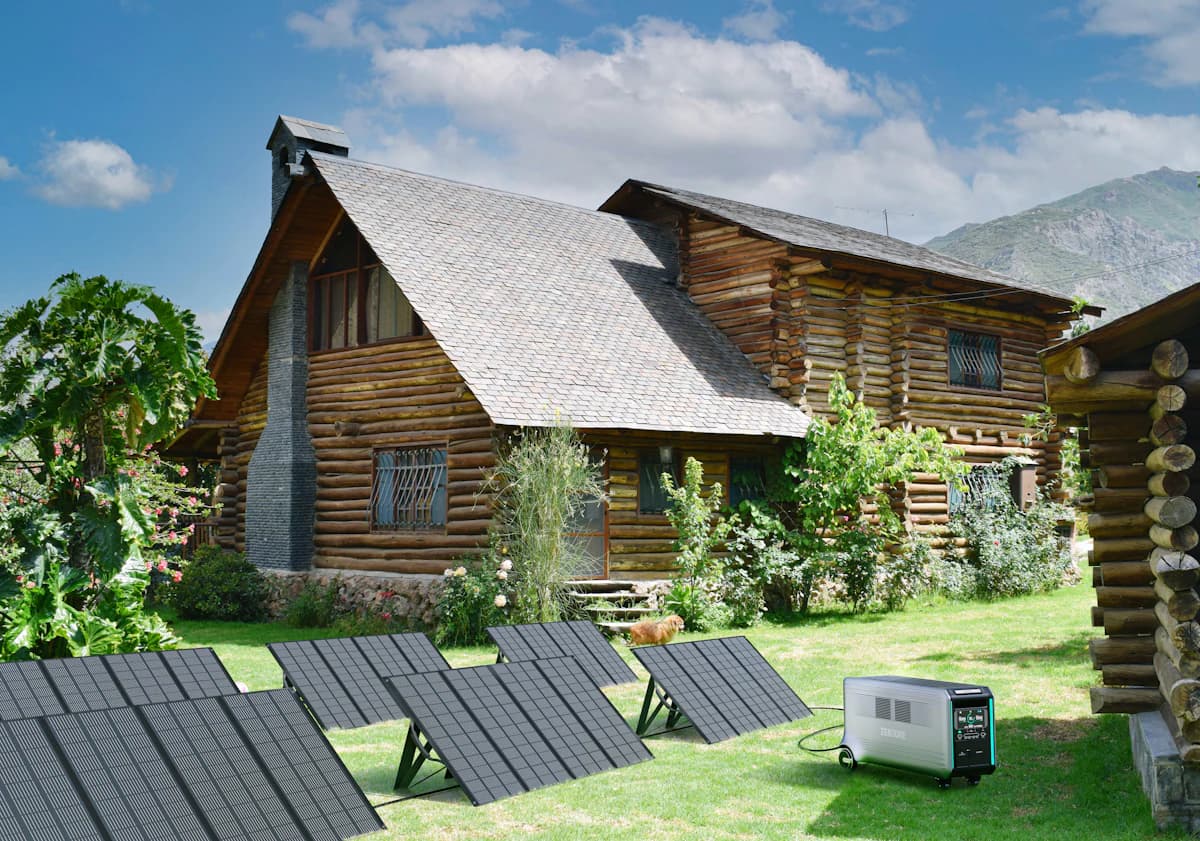
Plenty of guides will tell you whether off-grid living is legal. This one ranks the states where it is actually practical to do. There is a difference. A state can permit off-grid systems on paper and still bury an owner-builder in permits, inspections, and code requirements that make a hand-built cabin or DIY solar array a years-long ordeal.
The best off-grid states share five traits: off-grid living is broadly legal, there is minimal or no statewide building code (so owner-built solar, septic, and structures face less permitting), land is affordable, the solar resource is strong, and water is workable. No state wins on all five, so this ranking is about the best overall balance.
A note before the list: four states restrict off-grid living heavily at the statewide level. Connecticut, Hawaii, New Jersey, and Rhode Island are the hardest places to live off-grid in the country, whether because of dense regulation, mandatory utility connections, or strict building rules. They do not appear in this ranking. And no matter which state you choose, off-grid rules are ultimately decided at the county and sometimes the township level. Always confirm locally before you buy.
The 2026 Ranking
| Rank | State | Building code | Avg $/acre | Peak sun hrs | Note |
|---|---|---|---|---|---|
| 1 | Texas | No statewide code | $2,970 | 5.25 | No income tax, unlimited homestead exemption, huge land inventory |
| 2 | Wyoming | No statewide code | $975 | 6.06 | Cheapest land, very sunny, food-freedom laws, no income tax |
| 3 | Missouri | No statewide code | $4,200 | 4.5 | Wet riparian water, central location, no homeschool regulation |
| 4 | Arizona | Local adoption only | $2,200 | 6.8 | The sunniest state, strong off-grid culture; water is the constraint |
| 5 | Idaho | No statewide code | $4,180 | 4.92 | No code, retail raw milk allowed |
| 6 | Montana | No statewide code | $1,230 | 4.93 | No code, no sales tax |
| 7 | Oklahoma | Partial code | $2,880 | 5.0 | Cheap land, sunny, partial code |
| 8 | New Mexico | Statewide code applies | $1,250 | 5.9 | Very sunny, off-grid culture, but a statewide code applies |
| 9 | South Dakota | Local-adoption only | $1,950 | 4.1 | No income tax, cheap land |
| 10 | Tennessee | Partial code | $4,500 | 4.45 | Wet, no income tax, partial code |
Browse every state side by side on our state comparison hub.
Why These States Rank Where They Do
1. Texas
Texas takes the top spot because it balances every factor without a glaring weakness. There is no statewide building code, so rural counties often let you build with limited oversight. Land inventory is enormous, which keeps the average around $2,970 per acre and gives you real choice in climate and terrain. Sun is solid at 5.25 peak hours, and there is no state income tax. The unlimited homestead exemption is a genuine asset-protection draw for people putting everything into their land. See the full Texas profile.
2. Wyoming
Wyoming is the value pick. At roughly $975 per acre it has the cheapest land on this list, and at 6.06 peak sun hours it is one of the sunniest states in the country. There is no statewide building code, no income tax, and Wyoming's food-freedom laws are among the most permissive for selling and trading homemade and farm products. The trade-off is a harsh, dry, high-elevation climate and thin water in many counties. For a self-reliant build, it is hard to beat. See the Wyoming profile.
3. Missouri
Missouri rises this high mainly on water. It sits in a wet, riparian belt where surface water and wells are far easier than in the arid West, which removes the single biggest off-grid headache. There is no statewide building code and no homeschool regulation, both meaningful for self-reliant families. Its central location keeps you within reach of much of the country. The 4.5 peak sun hours are modest, so solar arrays need to be sized a bit larger. See the Missouri profile.
4. Arizona
Arizona is the sunniest state on the list at 6.8 peak sun hours, and it has one of the strongest off-grid cultures in the country, with established communities of people already living this way. It has no statewide building code (codes are adopted locally), and land is affordable at around $2,200 per acre. The catch is water. Hauling, storage, and well depth are real costs and constraints across much of the state, and they should drive your parcel choice more than anything else. See the Arizona profile.
5. Idaho
Idaho offers no statewide building code and a strong self-reliance culture, including retail sales of raw milk. Land runs higher at about $4,180 per acre, and sun is moderate at 4.92 peak hours, but rural counties are generally accommodating to owner-builders. See the Idaho profile.
6. Montana
Montana has no statewide building code and no sales tax, with very cheap land at roughly $1,230 per acre. Sun sits at 4.93 peak hours. The main consideration is climate: long, hard winters mean serious planning for heat, water lines, and solar production in the short days of December and January. See the Montana profile.
7. Oklahoma
Oklahoma is an underrated middle option. Land averages about $2,880 per acre, sun is a respectable 5.0 peak hours, and the state has only a partial building code, which leaves many rural areas relatively open. It pairs reasonable cost with reasonable sun. See the Oklahoma profile.
8. New Mexico
New Mexico has excellent sun at 5.9 peak hours, very cheap land at about $1,250 per acre, and a deep-rooted off-grid culture, especially in its earthship and rural communities. It ranks lower than its raw numbers suggest because a statewide building code applies, which adds permitting friction that the top states avoid. Like its arid neighbors, water is the limiting factor. See the New Mexico profile.
9. South Dakota
South Dakota offers no income tax and cheap land at around $1,950 per acre, and many areas operate without a local building code. Sun is the weak point at 4.1 peak hours, the lowest on this list, so solar systems need to be oversized to carry through winter. See the South Dakota profile.
10. Tennessee
Tennessee rounds out the list with no income tax, a wet climate that makes water easy, and only a partial building code. Land is the priciest here at about $4,500 per acre, and sun is modest at 4.45 peak hours, but the abundant water and mild climate appeal to people who would rather manage rain than ration it. See the Tennessee profile.
The Two Trade-offs That Decide Everything
Across the ranking, two factors do most of the work, and they often pull against each other.
Sun versus water. The sunniest states are arid: Arizona (6.8), Wyoming (6.06), New Mexico (5.9), and Nevada (5.9) all offer outstanding solar production but challenging water. You can size a solar array to match almost any sun resource, but you cannot manufacture water cheaply. In dry states, your parcel's water situation (well depth, hauling distance, storage) should drive the purchase. The wetter states — Missouri and Tennessee — flip the equation: easier water, more modest sun.
Code versus everything else. A missing statewide building code is the quiet difference-maker for owner-builders. It is why Texas, Wyoming, Missouri, Idaho, and Montana rank so well. When you plan to build your own structure, install your own solar, and put in your own septic, the absence of mandatory statewide inspection saves time, money, and frustration. New Mexico's statewide code is the main reason it ranks below where its excellent land and sun would otherwise place it.
For the full picture on both, read our explainers on whether off-grid living is legal by state and the best states with no building codes.
How to Use This Ranking
This list is a starting point, not a final answer. To narrow it down:
- Start with water. It is the hardest and most expensive constraint to solve. If you want easy water, lean toward Missouri or Tennessee. If you can manage hauling and storage, the arid sunbelt opens up. Our rainwater harvesting calculator shows how much your roof can capture to stretch a limited supply.
- Check the building code at the county level. Statewide rules are only half the story. A county within a code-free state may still have its own ordinances, and a county in a partial-code state may have very little.
- Match the climate to your build. Montana and Idaho winters demand different planning than a Texas or Arizona site.
- Weigh taxes if you are relocating income. Texas, Wyoming, South Dakota, and Tennessee have no state income tax.
For more on solar specifically, see our guide to the best states for off-grid solar, or size your system with our off-grid solar calculator. And for the broader self-reliance picture, including food and land laws, read the best states for homesteading in 2026.
Frequently Asked Questions
What is the single best state for off-grid living?
For most people, Texas. It is the best all-around balance: no statewide building code, a huge and varied land market at about $2,970 per acre, solid sun at 5.25 peak hours, no state income tax, and an unlimited homestead exemption. Wyoming is the strongest value alternative if your priority is the cheapest possible land and the most sun.
Which states should I avoid for off-grid living?
Connecticut, Hawaii, New Jersey, and Rhode Island restrict off-grid living heavily at the statewide level and are the hardest places in the country to do it. Beyond those, any state with a strict statewide building code adds permitting friction for owner-builders.
Which states have the best solar for off-grid?
By peak sun hours, Arizona leads at 6.8, followed by Wyoming at 6.06, then New Mexico and Nevada at 5.9 each, and Texas and Colorado in the 5.25 to 5.3 range. The catch is that the sunniest states are also the driest, so strong solar usually comes paired with a water challenge.
Does no statewide building code mean no rules at all?
No. It means there is no mandatory state-level code, but counties and townships can still adopt their own ordinances, zoning, and septic rules. Always confirm requirements with the specific county before buying. The absence of a statewide code lowers the baseline, but local rules still apply.
A 2026 Note
These rankings reflect conditions as of 2026. Land prices, solar economics, and especially local ordinances change. Several states have seen rural counties adopt or expand building codes in recent years, and water regulations in the arid West continue to tighten. Treat the figures here as a planning baseline, then verify the current rules with the county where you intend to buy. The fundamentals that put these states on top — code freedom, affordable land, strong sun, and workable water — tend to move slowly, but the details at the local level can change fast.
Ready to compare specific states? Start with the Homestead Finder state hub.

 Your brand here — Reach our audience of professional directory owners and boost your sales.